Qavelix
Full-Stack SaaS & Video Infrastructure
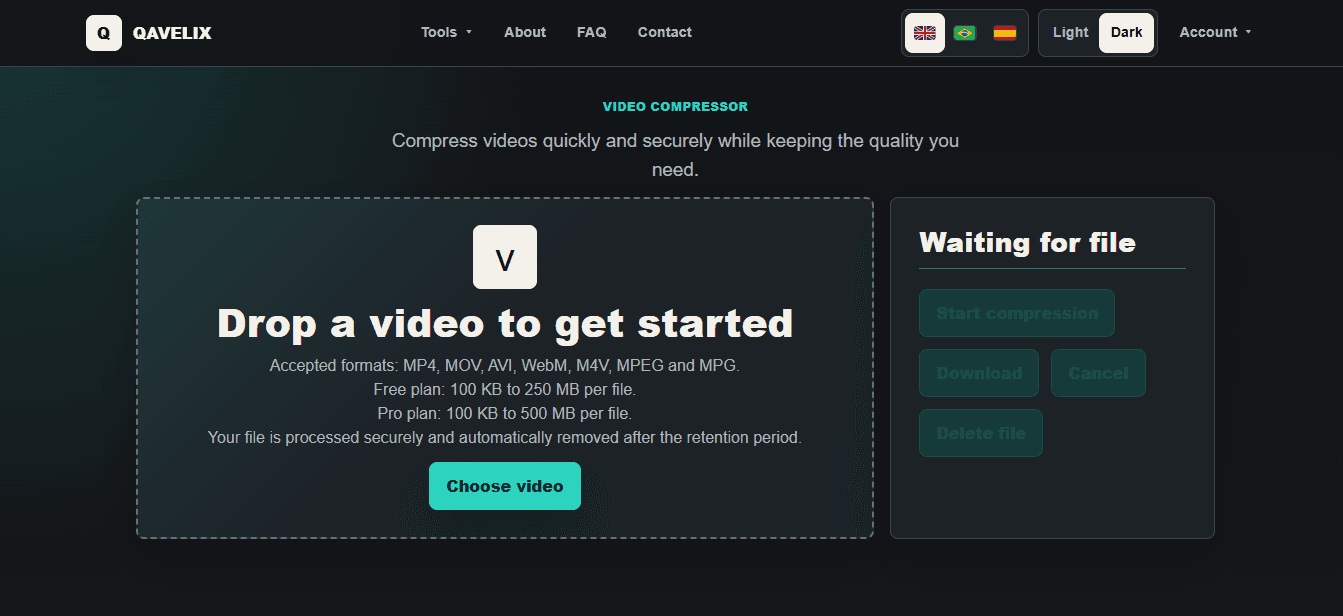
A scalable SaaS platform and automated video pipeline, architected and shipped solo from first commit to production.
The Challenge: Production-Grade Infrastructure With a Team of One
Qavelix needed to support high-volume video uploads with consistent, low-latency delivery on infrastructure that a single engineer could build, operate, and evolve without accumulating unmanageable technical debt.
That meant every architectural decision, from tenant data isolation to background job processing, had to hold up under real production load without a team to absorb operational surprises.
The Solution: A Modular, Type-Safe Monorepo
Built as a modular Next.js + Node.js monorepo with strict TypeScript boundaries between the web client, API layer, and background workers, keeping each concern independently testable and deployable.
A multi-tenant data model with row-level access control gives every customer secure isolation without duplicating infrastructure, and an FFmpeg-based transcoding pipeline handles adaptive bitrate output for cross-device playback.
- Modular Next.js + Node.js monorepo with strict TypeScript boundaries
- Multi-tenant data model with row-level access control
- FFmpeg transcoding pipeline with job queuing, retry logic, and adaptive bitrate output
- Chunked, resumable uploads for large media files on unstable connections
Outcome: Throughput, Reliability, and Speed
Structured logging and job-level observability catch processing failures before they reach customers, turning what would be silent pipeline failures into actionable alerts.
The result is infrastructure that performs like a funded engineering team built it, while staying maintainable enough for one engineer to keep shipping on.
- Structured logging and job-level observability across the pipeline
- Consistent, low-latency delivery even under high-volume upload spikes